Overall: 2/5
Food: 2/5
Service: 1/5
Ambience: 4/5
Location: 4/5
Price: 2/5
Serving Size: 3/5
Overall: 2/5
Food: 2/5
Service: 1/5
Ambience: 4/5
Location: 4/5
Price: 2/5
Serving Size: 3/5
- The Crimson Cafe boasts a beautiful, inviting atmosphere, perfect for any dining occasion.
Food Quality: 5/5
- The dishes are flavorful and well-prepared, offering a delightful culinary experience.
Variety: 5/5
- The menu provides a wide selection of options to suit different tastes and preferences.
Serving Size: 5/5
- Portions are generous, ensuring that you get great value for your meal.
Pricing: 3/5
- The restaurant is on the pricier side, but the quality and portion sizes justify the cost.
Service: 3/5
- The servers are new and still getting the hang of things, leading to confusion. However, they were polite and eager to assist.
Parking: 2/5
- There is not ample space for parking, which could be inconvenient during busy hours.
Overall Grade: 4.0/5
Comments:
Overall, The Crimson House delivers an excellent dining experience with its lovely ambiance, delicious food, and extensive menu. Although the service could use some improvement, the staff's willingness to help is commendable. The prices are high, but the generous portions and quality make it worth it. However, the limited parking space could be a drawback. We recommend giving it a try!
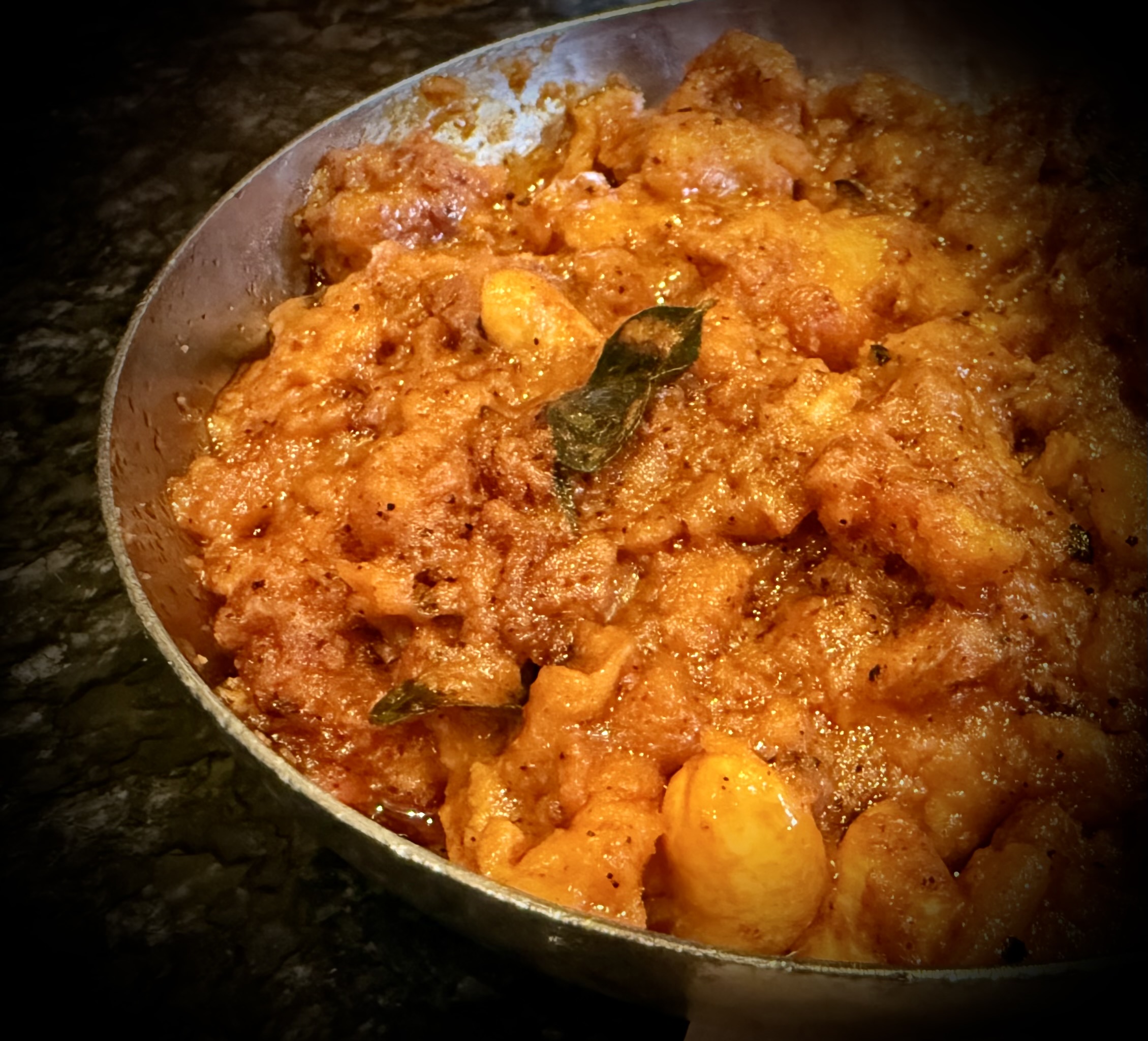
We ordered below for 3 people, the serving size was generous, and could not finish it all, has to get the food packed for consumption later at home. We paid in total of around 1900 INR. They also customized the food for us. We asked for veg preparations without garlic, which they did very happily for us.
Starters:
Main Course:
A casual taxable person, as defined under the Goods and Services Tax (GST) regime in India, refers to an individual or business entity who occasionally undertakes transactions involving the supply of goods or services, but does not have a fixed place of business in the location where the transaction is being conducted.
Here are some key points about casual taxable persons:
1. **Occasional Nature**: They engage in business activities sporadically or irregularly, typically not as their primary business activity.
2. **No Fixed Place of Business**: Unlike regular taxable persons who have a fixed place of business, casual taxable persons do not have a fixed place of business in the location where they are making supplies.
3. **Registration Requirement**: Casual taxable persons are required to register for GST in the state or Union territory where they intend to undertake business activities. This registration is temporary and typically valid for a specified period, which may be extended if necessary.
4. **Compliance Obligations**: Once registered, casual taxable persons are required to comply with GST regulations, including issuing tax invoices, collecting and remitting GST, and filing GST returns.
5. **Advance Tax Payment**: Casual taxable persons are typically required to make an advance deposit of GST based on an estimate of the tax liability for the period of registration. This deposit is made before the commencement of business activities.
6. **Input Tax Credit**: Casual taxable persons are generally eligible to claim input tax credit on GST paid on inputs and input services used in their business activities, subject to certain conditions.
Overall, casual taxable persons play a role in the GST framework by ensuring that individuals or businesses engaged in occasional transactions are brought within the ambit of GST and contribute to the tax revenue.

Integrated Tax (IGST) is one of the key components of India's Goods and Services Tax (GST) system. It is levied on the supply of goods and services across state borders within India. Here are the key points about Integrated Tax (IGST):
1. **Interstate Transactions**: IGST is applicable to transactions involving the supply of goods and services between different states or Union territories of India. It replaces the Central Sales Tax (CST) that was applicable to interstate sales under the previous tax regime.
2. **Destination-Based Taxation**: IGST follows the principle of destination-based taxation. This means that the tax revenue accrues to the state where the goods or services are consumed, rather than to the state where they are produced.
3. **Single Tax**: Unlike the previous tax system, where both Central and State taxes were levied separately on interstate transactions, IGST is a single tax levied by the central government on interstate supplies. It is designed to facilitate seamless trade and reduce tax complexities for businesses.
4. **Collected by the Central Government**: IGST is collected by the central government, and the revenue is shared between the central and state governments based on the destination principle. The state where the goods or services are consumed receives the share of revenue.
5. **Input Tax Credit (ITC)**: Businesses can claim Input Tax Credit (ITC) for IGST paid on inputs, input services, and capital goods used in the course of business, similar to the credits available for Central GST (CGST) and State GST (SGST) paid.
6. **Uniform Rate**: The rate of IGST is usually aligned with the rate of CGST and SGST applicable to intra-state transactions. This ensures uniformity in tax rates across the country.
7. **Import of Goods and Services**: IGST is also applicable to the import of goods and services into India. It is levied on the value of imported goods or services, along with customs duties.
Overall, IGST plays a crucial role in the GST system by harmonizing taxation on interstate transactions, promoting economic integration across states, and simplifying compliance for businesses engaged in interstate trade.
Registering for GST (Goods and Services Tax) in Noida, India, follows a specific process outlined by the Goods and Services Tax Network (GSTN). Here's a step-by-step guide:
1. **Visit the GST Portal**: Go to the official GST Portal website (https://www.gst.gov.in/).
2. **Click on "Register Now"**: On the GST Portal homepage, you'll find the "Register Now" button. Click on it to start the registration process.
3. **Select "New Registration"**: Choose the "New Registration" option.
4. **Fill in the Required Information**: You'll be prompted to fill in various details such as your PAN (Permanent Account Number), mobile number, and email address. You'll receive an OTP (One-Time Password) on the provided mobile number and email for verification.
5. **Enter OTP**: Enter the OTP received on your mobile number and email to proceed.
6. **Enter Business Details**: Provide details about your business such as legal name, trade name, PAN of the business, and the state in which you are applying for registration.
7. **Upload Documents**: You'll need to upload certain documents such as proof of business registration, proof of address of the principal place of business, bank account details, and authorized signatory details.
8. **Verification**: After submitting the application and documents, you'll need to digitally sign the application using DSC (Digital Signature Certificate), EVC (Electronic Verification Code), or Aadhaar OTP.
9. **Application Reference Number (ARN)**: Once the application is successfully submitted, you'll receive an Application Reference Number (ARN) via email and SMS.
10. **Processing by Tax Authorities**: The application will be processed by the GST authorities. If they require any additional information or documents, they may reach out to you.
11. **GSTIN Allotment**: Upon successful verification and approval of the application, a unique GST Identification Number (GSTIN) will be allotted to your business. This number will be available for download on the GST Portal.
12. **Filing Returns**: Once registered, you'll need to file GST returns regularly as per the prescribed schedule.
It's essential to ensure that all information provided during the registration process is accurate and up-to-date to avoid any delays or complications in the registration process. Additionally, consulting with a tax professional or accountant can also be beneficial to ensure compliance with GST regulations.

Indulging in the rich tapestry of Indian cuisine, Mix Veg Hara Bhara Kebab stands out as a delectable vegetarian delight that captivates both the eyes and the taste buds. This vibrant appetizer is a celebration of colors, textures, and flavors, making it a popular choice for those seeking a healthy and delicious alternative to traditional kebabs.
What sets Mix Veg Hara Bhara Kebab apart is its commitment to freshness and natural ingredients. The use of spinach not only imparts a striking green hue but also adds a nutritional boost, making it a guilt-free indulgence. These kebabs are often grilled or shallow-fried to achieve a perfect balance between a crispy exterior and a tender, flavorful interior.
Served with a side of mint chutney or tamarind sauce, Mix Veg Hara Bhara Kebab is not just a culinary creation; it's a journey through the diverse and delightful world of Indian flavors. Whether enjoyed as an appetizer at a gathering or as a snack to satiate your cravings, these kebabs are a testament to the creativity and versatility of vegetarian cuisine.
Ingredients:
The key to the tantalizing taste of Mix Veg Hara Bhara Kebab lies in the harmonious combination of various vegetables and spices. Here are the primary ingredients:
Preparation Method:
Gulati restaurant, located at Pandara Road, Delhi, is known for its delectable North Indian cuisine. During the festive season of Navratri, the restaurant brings a special menu that caters to the people who observe a fast during the nine-day celebration. I tried out their Navratri menu as a brunch option on the weekend, and it was a delightful experience.
The menu has a variety prepared from potato, sweet potato, cottage cheese, buckwheat flour, water chestnut flour, samvak rice, and rock salt. In fact, the regular menu was also without onion and garlic, which are usually avoided during Navratri fasts. Were the serving non-veg also? It is obviously out of question... :)

We ordered a platter, which has four heroes, namely Haryali Paneer tikka, Sabuadana tikki, Bharva Tandoori aloo, and Paneer gilafi kebab. Each hero has strong competition in terms of taste. I struggled to choose the one as the last bite, and paneer gilafi kebab won the contest. Platter was served with tangy mint chutney and sweet chutney that complemented perfectly.

Next, we ordered Navarati Thali. It has a few options to choose from Glass of Thandai / Chaach, Sabudana Tikki, Varat Papad , Paneer Makhani / Pudina Paneer, Shahi Aloo/ Aamras Aloo, Sitaphal Ki Sabzi/ Kele Ki Sabzi, Sanwak Ke Chawal, Sanwak Puri / Kuttu Puri, Sanwak Parantha / Kuttu Parantha, Raita Kheera, Sanwak Kheer / Sabudana Kheer, Fruit Salad. We opted for food marked in bold text.

I wanted to taste it all. However, stomach size has its own limitations. We had to let go few options.
We ordered Bottled water, Platter, and Thali and paid INR 1930 inclusive of all taxes. We were three people, and the food served was too much for us. We struggled to finish it all. The serving size was too good. One thali is quite a serving for one and is more than enough for two people.
Happy Eating... :)
Some more snaps/videos from the visit


In the previous post, we discussed unknowns in the project. Based on that, we decide the Project management technique should be Agile or Traditional.
In this post, we will discuss the criticality of the project for the organization. If the failure of the project can be a big impact on the organization, then adopting a new method is not prudent. Inspiration can be taken for some areas, but a complete revamp is not advisable. With the adaptation of Agile, the project should benefit instead of getting exposed to the risk of failure. If the project teams are comfortable in following a prescriptive plan, and the project is critical. In this case, adopting an Agile methodology is a risk not worth taking.
When the requirements will change and be more elaborated on as we progress with development, agile may be the best choice. However, if the project is of the type where requirements should not change, agile is not recommended. An example of such projects could be the one related to security and safety. One can not change the requirements, which may impact the safety of individuals. Like the foundation of a building is laid based upon the number of floors to be built. Customers cannot add a requirement of a few more floors in the building. Similarly, developing an off-roader on the chassis of a city car is a threat.
Agile is to be used only when it is a value add, otherwise it is better to stick to the traditional approach.
Hello friends, nice to catch up again on some Agile concepts. I have observed some of my peers and colleagues get confused over Kanban and Scrum. I have also heard them saying 'Ek hi toh baat hai, sab agile hai', which means 'it is the same thing, everything is agile'. Yes, both are agile frameworks, but there is a considerable difference. They can be used optimally when the difference is understood. There has been confusion around the scrum board and kanban board. It is at times though as the same thing. In this post, we will be discussing more the differences between these two and their beauty individually.
Kanban focusses on :
In Kanban, there is nothing like
Scrum and Kanban are similar as they both have
Scrum has below
Every event in scrum is timeboxed, which means have to be finished in a specific timeframe and cant be extended beyond that. Scrum is based on empiricism. It is supported by three pillars of Transparency, inspect and adapt. Every ceremony in scrum ensures that.
So, when to use Kanban and when to use scrum?
Kanban works well along with Scrum or any other agile method. Kanban helps in visualizing the flow of work irrespective of implied methodology or framework. It provides good transparency to the flow, and helps in getting work delivered faster and more often.s